
IFLA EAA EAct WG - Education Activities Working Group
Since 2023, IFLA has organized a global network of educational activities on an annual basis. The goal is to expand IFLA’s reach among students, academics, and institutions, while also addressing regional differences that challenge the notion of landscape architecture as a universally unified discipline. Indeed, this initiative aims to foster the development of a culturally broader and more inclusive community of landscape architects. It emphasizes the importance of research and the nurturing of Future Leaders in the field, including future practitioners and academics alike, as well as of a Global Landscape Academia that could serve as a valuable resource for capacity-building among educators in the field. To support this mission, IFLA has established the Education Activities Working Group, which is responsible for overseeing and coordinating the annual organization of the educational network, ensuring alignment with other IFLA initiatives.
- Main activity: IFLA Global Studio Program overview and development
education activities Working group Members
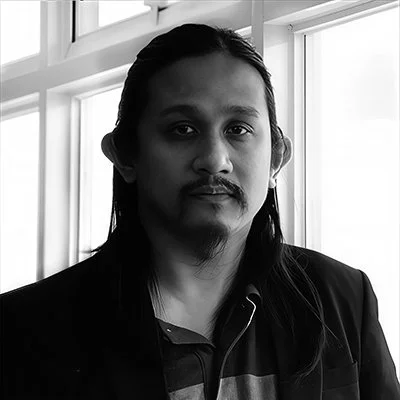
Angelo Paulo Mogul
Education activities Working Group Chair
Angelo Paulo Mogul is a licensed landscape architect and environmental planner based in the Philippines. He holds a Master’s degree in Tropical Landscape Architecture and a Bachelor’s degree in Landscape Architecture from the University of the Philippines Diliman, where he received the Phillip Recto Award for Best Thesis. Currently, he is completing his Doctorate in Sustainability from the University of the Philippines Open University. He is Principal Landscape Architect at Land & Man Integrated Design and Assistant Professor III at Bulacan State University. His academic and professional work focuses on sustainable urban planning, particularly TOD - Transit Oriented Development. Mogul developed the TOD Suitability Index, which was presented at major conferences such as IFLA, EASTS, and ECLAS, and published in journals including Alam Cipta and The Journal of Tourism and Leisure Studies. He has consulted on projects for Okada Manila, SMDC, and DOST, and actively contributes to planning healthy urban communities. At Bulacan State University, he also participates in quality assurance and accreditation processes, supporting excellence in landscape architecture education.

Robert Dalton
IFLA Education Activities Working Group member
Robert Dalton, Ph.D., is an Assistant Professor in Landscape Architecture at South Dakota State University. Besides his work at Michigan State University, where he served as a non-tenure track Assistant Professor after completing his degrees, Robert has been actively involved in private practice in Landscape Architecture across Illinois and Michigan from 2017 to 2022. His teaching experience spans multiple disciplines within landscape architecture, architecture, and graphic design, highlighting a commitment to innovative educational practices. He currently teaches studios for urban design, recreation design, and community design. In addition to teaching, Robert has been involved in various research and creative works through the USA Environmental Protection Agency, the East Dakota Water Development District, regional municipalities, and private businesses. He has collaborated with peers on scholarly publications, including articles in the Interdisciplinary Journal of Signage and Wayfinding and contributions to the IFLA World Congress. Robert also holds the role of Associate Editor for the Interdisciplinary Journal of Signage and Wayfinding.

Arturo Romero Carnicero
IFLA Education Activities Working Group member
Arturo Romero Carnicero is an architect and researcher specializing in urban nature, currently based along the Rhine, at the intersection of France, Germany, and Switzerland. He holds a Master’s degree in Architecture from the Universidad Politécnica de Madrid and a PhD in Urban Planning from the Karlsruhe Institute of Technology and the Université de Strasbourg. Arturo has taught at several European universities, including ENSA Strasbourg, UCLouvain, ESALA Edinburgh, and KIT, where he coordinated the French-German double Master’s degree in Architecture and Urban Planning in international contexts. He is an associate researcher at AMUP (Architecture, Morphologie/morphogénèse Urbaine et Projet) and LAREP (Laboratoire de recherche en projet de paysage) at the École Nationale Supérieure de Versailles. Currently, he is launching arroca.eu, a platform mapping urban nature through computational analysis, and exploring the design potential of speculative scenarios for climate and interspecies justice.
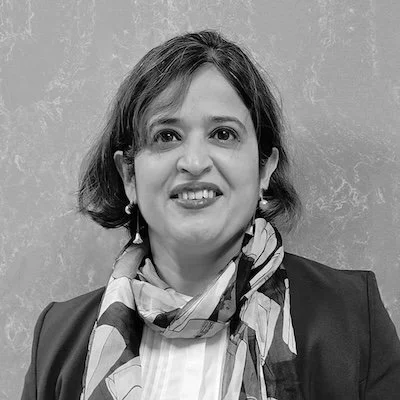
Bhakti Thakoor
IFLA Education Activities Working Group Member
Bhakti Thakoor is a landscape architect with over 20 years of experience. A double gold medallist with a postgraduate degree in Landscape Architecture from CEPT Ahmedabad, she founded Mumbai-based ENVIROSCAPE, a firm that has received various awards for integrating effective water management into landscape design. Bhakti has been associated with the Indian Society of Landscape Architects since its inception. She serves on the ISOLA Executive Committee, coordinates the ISOLA Education Board, and helped establish the ISOLA Mumbai Local Chapter. She has also taught in the master’s Program in Landscape Architecture in Mumbai and continues to contribute to academia as a guest lecturer and jury member. She sees sustainability as the thoughtful management of land, water, and vegetation. Her work creates spaces that unite art, architecture, and ecology, shaped by context, function, and both tangible and intangible elements.