
IFLA EAA - FEd Unit - IFLA Future Education Unit
Today, landscape is at the center of the sustainability debate. Also, it is at the center of the “spatially expansive” life of everyone. Anyhow, globally, the landscape culture is not a diffuse asset. We live in the landscape, but we often do not know what landscape is. Coalescing with the ongoing restructuring of tertiary education, this represents an additional challenge to exit the many sustainability impasses of the day. In light of this, IFLA considers it necessary to promote landscape culture together with researching new modalities of tertiary education. Not only that, but it is also deemed necessary to do this by taking “direct action” and proactively cooperating with globally leading professional practices that have already opened themselves to non-institutional forms of research. This perspective forms the foundation of the Future Education Research Unit and the activities that the unit develops, including the development of research, debates, publications, and educational initiatives that offer themselves as a unique test ground for what education in landscape architecture and the sustainability of the built environment will become in the future.
The IFLA FEd - Future Education Unit, chaired by Martha Thorne, is IFLA’s cross-cutting laboratory for innovating landscape architecture and, more generally, built environment education worldwide. FEd performs three integrated roles: (1) a foresight observatory that scans societal, technological, and environmental trends, assessing “Future Skills” for the Built Environment Professionals; (2) an R&D incubator that tests experimental teaching formats, namely through “Summer School” initiatives; and (3) a knowledge brokerage hub disseminating findings through open webinars, educator masterclasses, and publications. Collaborating with the various bodies of the IFLA Standing Committees, the FEd anchors agile, evidence-based curricular reform, while scholarships, high-profile professional collaborations, and external partnerships ensure global participation and impact amidst the rapidly developing challenges of global sustainability.
- Main activity: IFLA education activities development and implementation
Future education unit Working group Members

Martha thorne
chair of future education unit
Martha holds degrees from State University of New York at Buffalo and University of Pennsylvania. She also pursued further studies at the London School of Economics.From 1996 until 2005, she was Associate Curator for the Department of Architecture at The Art Institute of Chicago, where she was responsible for publication development, research initiatives, and collection curation. In 2005, she was appointed Executive Director of the Pritzker Architecture Prize, a role she held until 2020.From 2015 to 2021, she served as dean of IE University's Madrid and Segovia School of Architecture and Design. Before that, she was Associate Dean for External Relations at the same institution. Thorne has also been a member of the Board of Trustees of the Graham Foundation for Advanced Studies in the Fine Arts and has served on the Board of Advisors for the International Archive of Women in Architecture.
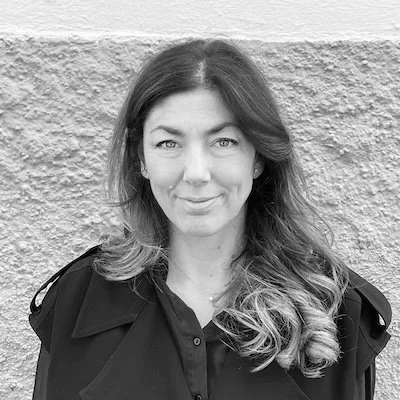
Angela Palmitessa
IFLA Future Education Unit Executive Secretary
Angela Palmitessa, holding an architectural degree from the Accademia di architettura in Mendrisio and a second level Master's from the University of Naples, Italy, has consistently explored the interplay between built space and its cultural-geographical context. Her perspective has progressively fueled by internationally recognized collaborations across diverse ateliers and institutions, including experiences in Portugal, France, Netherlands, Switzerland, and Italy. This evolving understanding, significantly enriched by an extensive knowledge of Portuguese architecture and culture, led to a transformative collaboration at the Academy of Architecture in Mendrisio, where she now collaborates in the implementation of didactic activities, marking a pivotal stage in cultivating a deep understanding in landscape architecture.