
Accessibility Isn’t Enough: Designing Truly Inclusive Playgrounds
Imagine arriving at a new playground full of exciting structures and activity, only to realise that you cannot join the play. For many children with disabilities or developmental differences, this experience is still common. Even in well-designed parks, playgrounds can unintentionally exclude children who move, perceive or interact with the world differently.
Playgrounds are often the first public spaces children experience independently. They are places where movement, imagination and social interaction come together, shaping early experiences of community and belonging. Yet for many children and families, these spaces remain only partially accessible, or not accessible at all.
Children with physical, sensory or cognitive impairments frequently encounter playground environments that unintentionally limit participation. Even when accessibility standards are met, meaningful play opportunities are not always guaranteed.
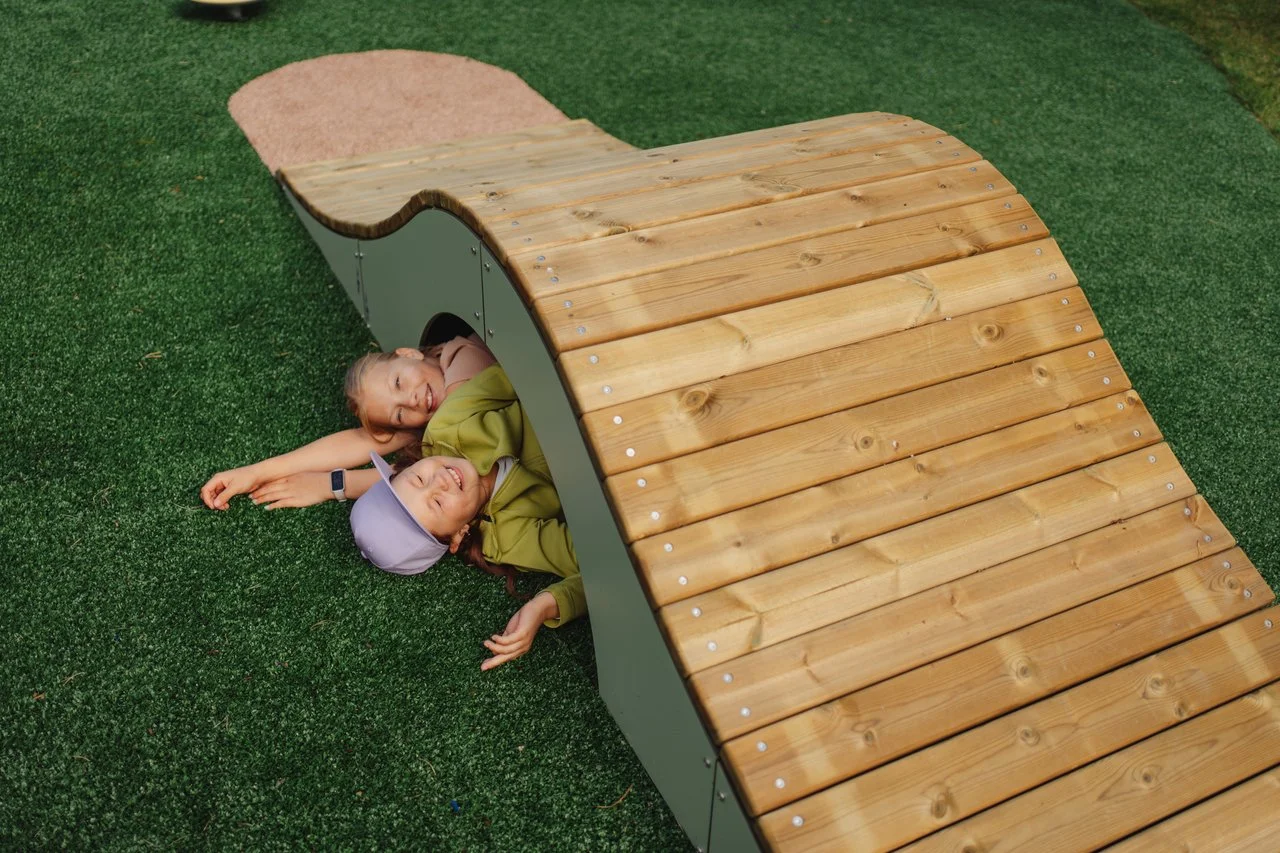
As awareness of inclusive design grows, landscape architects and designers are taking a closer look at who playgrounds currently serve, and who they leave out.
Designing inclusive playgrounds requires moving beyond accessibility compliance toward environments where children of different abilities can actively participate in play together.
Across the world, cities and municipalities are beginning to rethink playgrounds as essential social infrastructure. From Europe to North America and Asia-Pacific, inclusive play environments are increasingly recognised as part of broader efforts to design healthier, more equitable public spaces. For landscape architects, this shift highlights the importance of designing playgrounds that welcome a wider diversity of abilities, experiences and ways of engaging with play.
Accessibility versus inclusion
Accessibility and inclusion are closely related concepts, but they represent different goals in playground design. Accessibility focuses on physical access. It ensures that spaces can be reached and navigated by people with mobility challenges through features such as accessible pathways, ramps or transfer platforms.
Inclusion, however, goes further. An inclusive playground enables children to take part in play, interact with others and feel welcome in the space. It considers the diverse ways children experience play through movement, perception, communication and social interaction.
Research on inclusive playground environments highlights that meaningful participation depends not only on physical access, but also on play value, social interaction and a sense of belonging within the environment.*
For example, providing a ramp to a play tower may allow a child using a wheelchair to reach the structure. But if there are no engaging activities upon arrival, the design still falls short of being inclusive. True inclusion therefore requires landscape architects to consider not only how children reach play equipment, but also how they participate in the play experience itself.
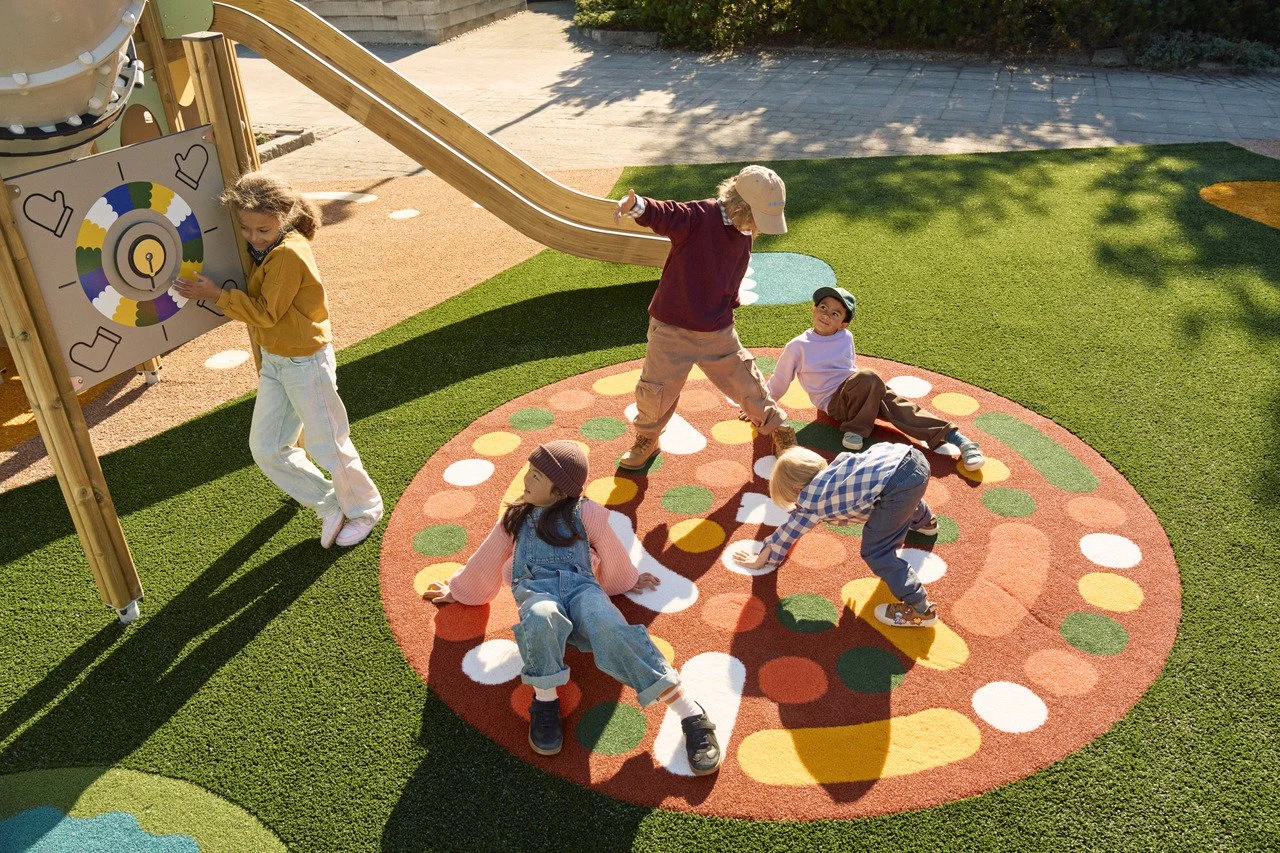
Designing for different ways of experiencing play
Children interact with playgrounds through their bodies, senses and social relationships. Inclusive design must therefore accommodate a wide range of abilities and ways of engaging with the environment. Three perspectives can help guide inclusive playground design:
Body – mobility, balance, coordination and motor skills
Mind – communication, cognition, emotional regulation and social interaction
Senses – vision, hearing, touch and sensory sensitivities
Research on inclusive play environments shows that children benefit from playgrounds that offer variety and flexibility in play opportunities, allowing them to engage with the environment in different ways depending on their abilities and preferences.
(Ines Wenger, Helen Lynch, Maria Prellwitz & Christina Schulze (2024) Children’s experiences of playground characteristics that contribute to play value and inclusion: Insights from a meta-ethnography, Journal of Occupational Science, 31:3, 405-432, DOI: 10.1080/14427591.2023.2248135, https://www.tandfonline.com/doi/pdf/10.1080/14427591.2023.2248135)
For landscape architects, this often means designing play environments that support multiple forms of engagement, rather than prescribing a single way of playing.
Practical design strategies for inclusive playgrounds
Inclusive playgrounds do not necessarily require complex equipment. In many cases, relatively small design decisions can significantly improve participation.
Consider accessibility of the location
Inclusion begins before children arrive at the playground. Designers should consider how easily the site can be reached by different users, including access via public transport, parking proximity (including accessible parking spaces), and safe, barrier-free routes from entrances to the play area. If families cannot reach the playground independently, the design risks excluding them, regardless of how inclusive the equipment itself is.
Provide multiple ways to engage in play
Play elements should allow children to interact from different positions and abilities. Ground-level play features, varied access routes and shared play elements help children with different abilities participate together. Evidence-based studies on inclusive playground design emphasise the importance of combining ground-level and elevated play opportunities so that children of different mobility levels can interact within the same environment.
(Fernelius, Courtney L., "Evidence-Based Practices for the Design of Inclusive Playgrounds that Support Peer Interactions Among Children with All Abilities" (2017). All Graduate Theses and Dissertations, Spring 1920 to Summer 2023. 6809. https://digitalcommons.usu.edu/etd/6809)
Maintain visual connections between play levels
Children naturally want to observe and interact with what others are doing. Transparent structures, open layouts or the use of nets instead of solid floors allow children on different levels to see and communicate with each other. Even children who remain on the ground can feel part of the play activity.
Support balance and stability
Small adjustments, such as additional handholds, wider steps or supportive elements, can help children with coordination or balance challenges navigate play structures more confidently. These features rarely affect other users' experience but can significantly improve accessibility.
Integrate communication and sensory elements
Playgrounds can support communication through symbols, visual cues or interactive panels. Colour contrasts and tactile elements can help children with visual impairments navigate the space, while sensory-rich features can support children with autism or sensory sensitivities. Research into inclusive playground environments highlights the importance of sensory-aware design to support children with diverse neurological and sensory needs.
(Harris, K., Rosinski, P., Wood-Nartker, J. et al. Developing Inclusive Playgrounds That Welcome All Children—Including Those with Autism. Rev J Autism Dev Disord 11, 433–441 (2024). https://doi.org/10.1007/s40489-022-00345-3)
Create spaces for social interaction and retreat
Not all play is active or physical. Inclusive playgrounds benefit from spaces where children can gather, observe or take a break from stimulation. Seating areas, quieter zones and “hangout” spaces allow children to participate socially at their own pace. Studies of inclusive playground use also show that these environments can encourage friendship formation and social interaction between children with and without disabilities, strengthening community connections.
(Aeshah Abdullah Alsarawi, Francie R. Murry, Inclusive playgrounds: Caregiver perceptions of accessibility and use, Children and Youth Services Review, Volume 164, 2024, 107861, ISSN 0190-7409, https://doi.org/10.1016/j.childyouth.2024.107861.)
Measuring inclusivity in playground design
While awareness of inclusive design has increased, evaluating how inclusive a playground actually is remains challenging. Designers and planners often lack clear tools to assess how well playground equipment supports different users.
In response, new approaches are emerging within the playground industry. One example is the development of Inclusivity Ratings, created through collaboration between playground manufacturer Lappset and the Finnish Paralympic Committee.
In this framework, play equipment is evaluated across a broad range of abilities related to body, mind and sensory experiences. Each product is assessed across 26 different areas, including mobility, communication, cognitive challenges, coordination, vision, hearing and sensory sensitivities. Ratings are assigned on a scale of 0 to 3, providing designers with a clearer understanding of how play elements support different types of participation.
These inclusivity ratings are integrated into Lappset’s Prime playground equipment collection, helping planners and designers better evaluate how specific play structures contribute to inclusive play experiences.
In addition to accessibility and participation, the framework also evaluates how play environments support children's development. Physical skills such as balance, coordination, and agility are considered alongside emotional development factors, including social interaction, creativity, role-play, and confidence. While such tools do not offer a universal solution, they represent an important step toward making inclusive design more measurable and transparent.
Designing playgrounds where everyone belongs
Creating inclusive playgrounds requires collaboration between designers, planners, researchers, manufacturers and communities. It also requires moving beyond minimum standards and thinking more holistically about how children experience play.
For landscape architects, inclusive playground design is an opportunity to shape public spaces that reflect the diversity of the communities they serve.
When playgrounds are designed to welcome a wider range of abilities, they become more than play environments. They become places where children learn to interact, explore and develop together.
And ultimately, they help ensure that play remains what it should always be: a right for every child, not a privilege for some.
Lappset Group designs and manufactures sustainable playground, sports and park equipment that supports active and inclusive outdoor environments. Based in Finland, the company combines Nordic wood, long-lasting materials and research-based design principles to turn ideas into solutions. By working closely with landscape architects, cities and communities worldwide, Lappset goes beyond standard solutions to create environments that enable meaningful play, movement and wellbeing for people of all ages and abilities.
Lappset Prime playground collection: https://www.lappset.com/en-GB/prime-playground-equipment?utm_source=ifla&utm_medium=referral&utm_campaign=ifla_2026_hub_inclusion&utm_content=link